


How an Indian-origin advisory firm reads the Bucharest opening for the global citizens whose lives and interests cross borders.
Watch the full interview, exclusively on KPTV here.
.
The state visit paid by India’s President, Droupadi Murmu, to Romania between 23 and 25 July 2026 carried a significance that reached well past the ceremony of the first Indian presidential journey to Bucharest in more than three decades. The meetings with President Nicușor Dan, with the leaders of Parliament and with Prime Minister Ilie Bolojan, the Romania–India Business Forum, the agreements in education, research and sport, the honorary doctorate conferred by the Bucharest University of Economic Studies and the dialogue with the Indian diaspora all pointed to a single ambition: turning Romania into a European platform for Indian capital, technology and industrial capacity.
That ambition, negotiated at the level of states, will in time be tested at the level of families and firms. Among the private advisers present in Bucharest for the occasion was Harsh Patel, founder and global chief executive of Water & Shark, an Indian-origin firm that has spent a decade building the structures through which private wealth crosses borders. The corridor that two presidents opened this week is, for a house such as his, the beginning of a considerable body of work.
A visit built around the economy
At Cotroceni Palace, Droupadi Murmu and Nicușor Dan set the political direction of a relationship preparing to enter a strategic phase. Romania regards India as one of the leading economic and technological powers of the coming decades, while India sees in Romania a member of both the European Union and NATO, with access to the Black Sea, the Danube and the logistical corridors that connect Asia to the centre of the continent. India already ranks among Romania’s most important trading partners in the Indo-Pacific region, with bilateral exchanges surpassing 1.3 billion dollars in the 2024–2025 financial year, and both governments have set their sights on doubling that figure over the coming years. Speaking at the Business Forum, President Murmu described Romania as a natural and valuable partner for India and invited Romanian companies into what she called India’s growth story, while the two sides designated 2028, the eightieth anniversary of their diplomatic relations, a Year of Innovation.
The corridor the treaties open
The economic logic of the visit rests on a larger event that took place months earlier. In January 2026, India and the European Union concluded, at the political level, a free trade agreement of a scale without precedent, covering close to two billion people, roughly a quarter of the world economy and almost a third of global trade. Once ratified and in force, expected in early 2027, the agreement is set to remove duties on the overwhelming majority of Indian exports to the European market from the first day of its application. For an Indian company weighing an entry into Europe, a full member of the Union that has recently joined the Schengen Area, endowed with the port of Constanța and a substantial industrial base, becomes one of the more practical points of entry. Bucharest has read the visit in precisely these terms, and much of the official programme was designed to translate that reading into concrete projects in pharmaceuticals, information technology, defence manufacturing, renewable energy and semiconductors.
The new geography of private wealth
A corridor of this kind moves more than goods. It moves companies, founders and families, and with them the delicate question of how a fortune is arranged when a life is lived across several countries at once. Here the timing of the Bucharest visit meets a broader shift that has turned the movement of private wealth into a subject of serious study. The 2026 Henley Private Wealth Migration Report describes how the largest fortunes are increasingly managed the way an institution manages a portfolio, distributed deliberately across several jurisdictions so that the security of a family rests on no single government, currency or court. India has become one of the principal sources of this movement, as its entrepreneurs and family enterprises look outward for stability, optionality and reach. For the families now contemplating Europe through the door that Romania offers, opportunity and complexity tend to arrive together, and the second rarely announces itself as loudly as the first.
A practice built for the global citizen
Water & Shark has spent the better part of a decade preparing for exactly this readership. Founded by Harsh Patel, a chartered accountant and international lawyer, the firm brings law, tax and finance under a single roof across more than twelve countries and four continents. Its clients are the global citizens of the present age: royal offices, sovereign entities, the founders of unicorn companies and ultra-high-net-worth families whose interests have long since outgrown any single passport. The work the firm does for them runs from cross-border wealth structuring and international tax to the design and governance of family offices, succession planning, holding structures, and the second residences and citizenships that give a family somewhere to stand when circumstances in one country change. Patel’s own summary of the philosophy is characteristically plain: a fortune held without control, he argues, is a mirage, and genuine power lies in the freedom to move across borders, jurisdictions and opportunities.
Authority earned in parliaments
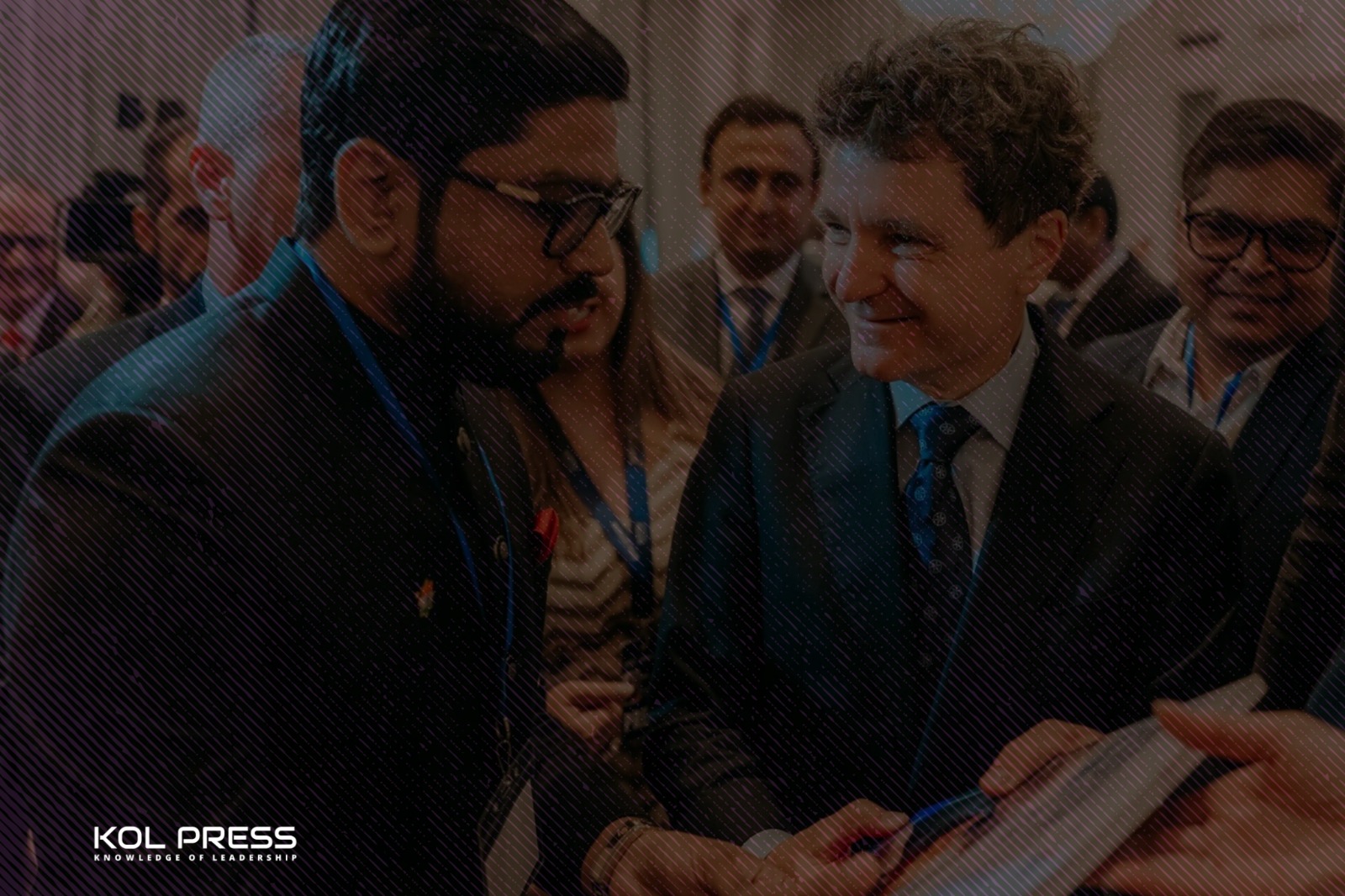
What distinguishes Patel in a crowded field is a record built in the institutions where the rules themselves are written. Water & Shark produced the first study of the India–European Union trade agreement authored by a firm of Indian origin, presented at the European Parliament, and followed it with an analysis of the United Kingdom–India agreement delivered at the House of Lords. His contribution to India’s interests across these forums drew a personal letter of commendation from Prime Minister Narendra Modi, an acknowledgement he tends to describe as a responsibility carried on behalf of a wider community of Indian enterprise. His work in asset protection and international tax has been recognised on international platforms from the Gulf to the wealth-structuring forums of Asia. In Bucharest, on the margins of the Business Forum, Patel met President Nicușor Dan, one of the few private advisers in a hall otherwise occupied by heads of state and ministers.
The real test begins after the delegation leaves
As with the visit itself, the significance of the week will be measured in what follows it. Treaties describe the terms on which states intend to trade; the families and companies that will travel the routes those treaties open require counsel of a different order, concerned less with tariff schedules than with where wealth should be held, how it should be arranged for the generation that inherits it, and how a second residence or citizenship can be put in place well before it is needed. This is the ground on which Water & Shark has built its name, and the reason a private adviser found himself in the same rooms as two presidents. The frameworks are now largely written: the India–European Union agreement, the Romanian gateway, a bilateral relationship intended to double in size. What remains is the slower and quieter work of turning an opening between states into protected, mobile and durable wealth for the people who live between them. In Bucharest this July, for a few days, the two questions occupied the same room; the answer to the second will take considerably longer to write.
Watch the full interview with Harsh Patel, exclusively on KPTV here.
Conținut editorial susținut de Water & Shark — Global Advisors for Global Citizens. waterandshark.com