

1. EU–India Trade Agreement: A Historic Milestone
The EU and India concluded the EU–India Trade Agreement in January 2026, marking a major milestone in their strategic and economic partnership. What do you see as the biggest opportunities this Agreement will unlock for businesses and investors, and what are the key challenges in translating it into real economic impact?
Having worked on EU India engagement for nearly two decades, I genuinely see the EU India Trade Agreement as much more than a trade deal. It is a strategic shift in the relationship between two major democratic and economic regions.
The biggest opportunity that we at Europe India Centre for Business and Industry (EICBI) see is that Europe increasingly views India not only as a market, but as a long-term strategic partner in technology, manufacturing, sustainability, and supply-chain resilience. At the same time, Indian companies are becoming far more serious about building a stronger presence in Europe, while European companies are increasingly exploring India as a long-term growth and manufacturing destination.
But tariff reduction alone is not enough. Indian companies need to better understand EU regulations, sustainability expectations, and compliance frameworks, while European companies entering India must understand the country’s regulatory environment, state-level opportunities, and business culture..
2. Defining the Next Phase of EU–India Cooperation
With global supply chains undergoing major realignments, Europe is increasingly viewing India as a key strategic partner. Which sectors do you believe will define the next phase of EU–India cooperation : technology, green energy, advanced manufacturing, defense, digital innovation, or others?
I believe the next phase of EU India cooperation will be driven by sectors that combine strategic importance with long-term resilience.
Technology, green energy, digital infrastructure, advanced manufacturing, AI, semiconductors, mobility, and defense cooperation will all become increasingly important. Europe is looking for trusted partners, while India is positioning itself as a major global growth engine.
What I also see increasingly is European companies looking at India not only for market access, but also for talent, manufacturing partnerships, engineering capabilities, and long-term operational expansion.
The relationship is now moving from symbolic diplomacy towards practical strategic collaboration.
3. Supporting SMEs Through Cross-Border Collaboration
With the EU–India Trade Agreement now concluded, how can its benefits be made more accessible to small and medium-sized enterprises on both sides, especially in terms of reducing regulatory barriers, improving market access, and enabling practical business partnerships?
One thing I have consistently observed through EICBI’s engagements is that SMEs often struggle not because of lack of opportunity, but because the process feels too complex.
Many Indian businesses find EU regulations difficult to navigate, while European SMEs entering India often require greater clarity on local partnerships, regulatory systems, taxation, and market-entry strategies.
We therefore need stronger facilitation ecosystems that simplify engagement. This includes trusted business networks, advisory support, market intelligence, matchmaking platforms, and practical guidance on compliance and investment opportunities and this is where EICBI can help organisations to tap opportunities in EU India corridor
The future will increasingly be about long-term partnerships rather than simple buyer-seller relationships.
4. India–Romania Relations Today
How would you describe the current state of economic and business relations between India and Romania, and where do you see the strongest momentum or gaps in the partnership today?
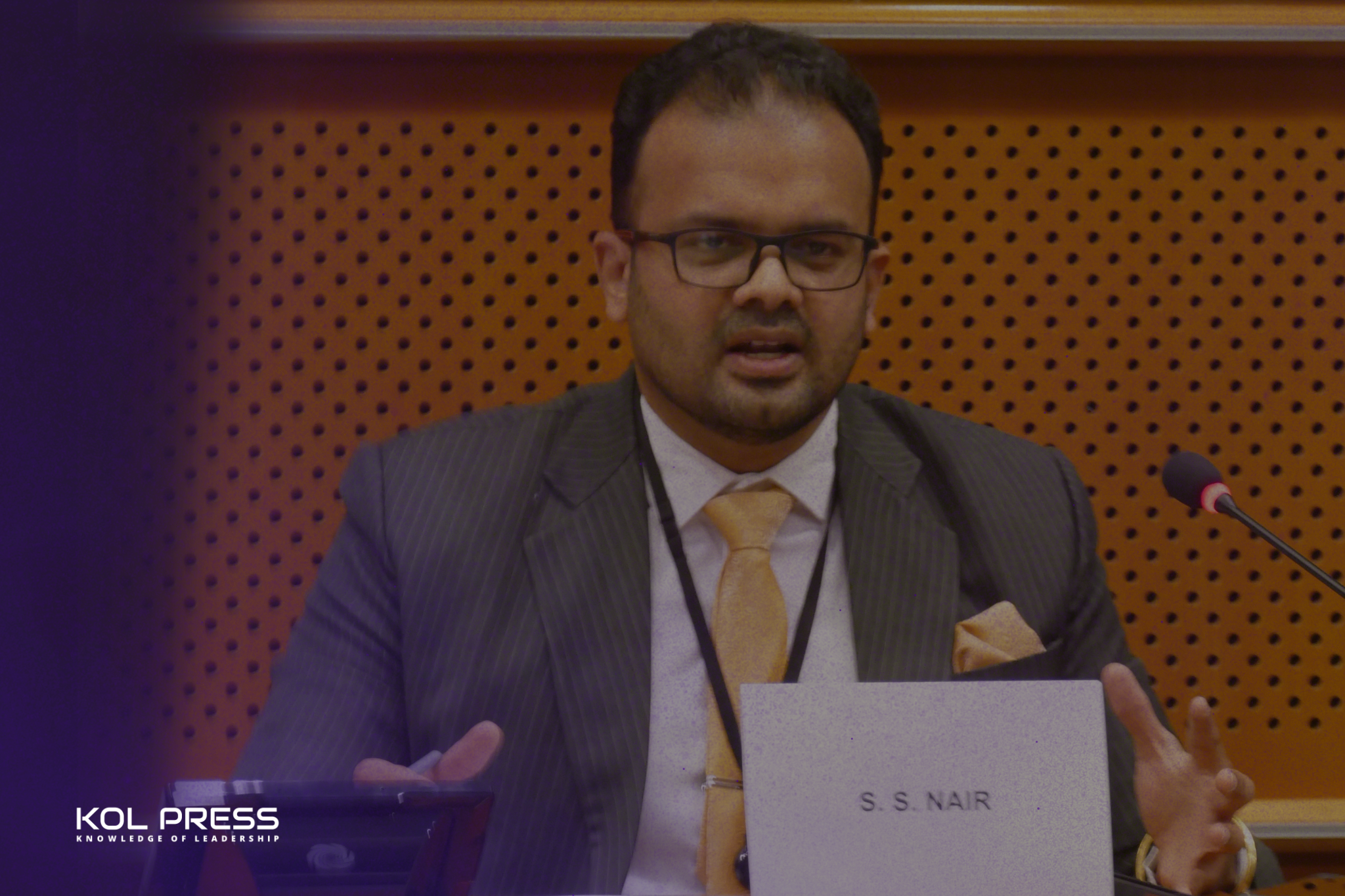
India Romania relations are at a promising stage, with increasing interest from both sides to deepen engagement. We have had the pleasure of hosting Member of European Parliament from Romania during our session at European Parliament and engaging with Ambassadors and Diplomats of Romania in India. Through our interactions within EICBI, I have seen growing interest from Indian companies exploring Romania as a gateway into wider Europe, while Romanian and broader European companies are increasingly evaluating India as a long-term growth market.
Romania offers strategic advantages through its EU access, industrial capabilities, skilled workforce, and regional connectivity. India, on the other hand, offers scale, talent, manufacturing depth, and rapidly growing domestic demand.
The biggest gap today is awareness and stronger institutional connectivity between the two ecosystems.
5. High-Growth Sectors Between India and Romania
Which sectors do you see offering the strongest potential for investment and collaboration between India and Romania today, and what makes these industries particularly attractive for businesses on both sides in terms of growth, competitiveness, and long-term value creation?
I see strong opportunities in IT services, engineering support, manufacturing partnerships, logistics, industrial services, renewable energy, food processing, and education collaboration.
India’s strength in technology and engineering can complement Romania’s industrial ecosystem very effectively. At the same time, Romania can offer European businesses looking at India valuable opportunities through Indian manufacturing, digital ecosystems, and expanding consumer markets.
What makes these sectors attractive is that they align with larger global shifts around digitalisation, sustainability, and supply-chain diversification.
6. Encouraging Bilateral Trade and Investment
With growing interest from Romanian businesses in India and Indian companies expanding into Europe, what concrete policy measures and institutional mechanisms are needed to strengthen bilateral trade and encourage long-term investment flows between the two sides?
Business relationships grow when there is continuity of engagement, not just occasional delegation visits.
We need stronger institutional bridges between India and Romania through chambers, parliamentary exchanges, universities, and industry platforms. Investors also require greater clarity, predictability, and access to trusted information.
Indian businesses need support in navigating European regulatory frameworks, while European businesses entering India require better understanding of local market dynamics, state-level opportunities, and partnership ecosystems.
Reducing uncertainty is often the key to unlocking investment.
7. Romania’s Role as a European Gateway
How can Romania leverage its strategic position within the European Union and Eastern Europe to become a stronger entry point for Indian businesses expanding into wider European markets?
Romania is very well positioned geographically and strategically to emerge as an important gateway for Indian businesses entering Europe.
At the same time, Romania can also become a strong base for European companies seeking to build partnerships with Indian manufacturing, engineering, and technology ecosystems.
Its EU market access, industrial infrastructure, logistics potential, and connectivity to Eastern Europe provide important advantages in an increasingly regionalised global economy
8. Innovation, Talent, and Startup Collaboration
Beyond traditional trade and investment sectors, where do you see the most realistic opportunities for collaboration between Indian companies and Romania’s emerging business and innovation landscape, particularly in areas such as IT services, engineering, manufacturing support, and digital transformation?
One of the most exciting areas for future collaboration is innovation driven partnerships.
India today is increasingly becoming a global technology and innovation ecosystem, while Romania has a growing startup and engineering landscape with strong technical talent.
I see major opportunities in AI, software engineering, cybersecurity, manufacturing support, automation, fintech, and digital transformation services. European companies are also increasingly looking at India not just for outsourcing, but for innovation partnerships and long-term technology collaboration.
9. Cultural and Educational Partnerships
Beyond economics and investment, how important are cultural exchange, education partnerships, and people-to-people connections in building stronger and more sustainable India- Romania and India -Europe relations?
I personally believe people-to-people engagement is one of the most underestimated aspects of international relations.
Trade agreements are important, but long-term partnerships are ultimately built through trust, understanding, and relationships. Young Europeans need a deeper understanding of modern India beyond stereotypes, while Indian students, entrepreneurs, and emerging leaders should engage with Europe in a more informed and strategic way.
This has been one of the core reasons behind many of our diplomatic engagement initiatives through the Europe India Centre for Business & Industry. Through programmes such as the EuropeIndia40 Leaders initiative, we have sought to showcase and connect the work of emerging leaders under 40 across the India–Europe corridor.
Our broader ECICBI engagement platforms and campaigns regularly bring together Members of the European Parliament, national parliamentarians, diplomats, business leaders, universities, and emerging leaders to strengthen dialogue and advance collaboration across the European Union–India and wider Europe–India corridor.
Educational exchanges, leadership programmes, and institutional collaboration play a very important role in creating that long-term understanding and trust between societies
10. EICBI’s Vision for the Future
Looking ahead, what role do you see the Europe India Centre for Business and Industry playing in strengthening business cooperation and economic partnerships between India, Romania, and the broader European region?
EICBI’s aims to continue playing the role of a bridge-builder between India and European Union/ India and wider Europe by connecting policymakers, businesses, investors, universities, and emerging leaders.
Over the years, our engagements at the European Parliament, India and across Europe have focused on creating meaningful dialogue and long-term relationships.
Going forward, we want to further support Indian companies entering Europe while also helping European businesses better understand opportunities within India’s rapidly evolving economic ecosystem.
11. Building Resilient Economic Partnerships
In today’s rapidly evolving geopolitical and economic environment, how can India and European nations work together to build more resilient, sustainable, and trusted economic partnerships for the future?
The world is becoming more fragmented geopolitically and economically. In this environment, India and Europe have a strong opportunity to build trusted and resilient partnerships based on complementary strengths.
This includes supply-chain resilience, sustainability cooperation, energy partnerships, trusted technology ecosystems, and diversified manufacturing networks.
Indian companies can benefit from Europe’s technological and regulatory strengths, while European businesses can leverage India’s scale, talent, manufacturing depth, and growing domestic market.
12. Long-Term Vision for India–Europe Relations
Over the next five to ten years, what is your broader vision for the future of India – Europe economic relations, and where do you see the greatest untapped potential for collaboration?
Over the next decade, I believe India European Union/ Wider Europe India relations will become one of the world’s most important strategic economic partnerships.
The untapped potential is enormous, not only in trade and investment, but also in technology, education, sustainability, innovation, mobility, manufacturing, and digital transformation.
What excites me most is that we are now moving beyond traditional diplomacy into ecosystem-level collaboration involving businesses, universities, startups, policymakers, and civil society. European companies increasingly recognise that India is not just a future opportunity, it is a present strategic priority.
13. Supply Chain Resilience and the China+1 Strategy
As global companies increasingly pursue “China+1” strategies to diversify supply chains and reduce risk, how can India and Romania position themselves as complementary partners in building more resilient, cost-competitive, and geographically balanced manufacturing and supply chain networks?
The global supply-chain realignment is creating major opportunities for both India and Romania.
India offers manufacturing scale, engineering capabilities, and a massive domestic market, while Romania provides EU access, industrial infrastructure, technical talent, and regional connectivity.
At the same time, many European companies are actively exploring India as part of their diversification strategies to reduce concentration risks and build more resilient global supply chains.
India and Romania can therefore play complementary roles within broader Europe-linked manufacturing and logistics ecosystems.
14. Green Transition and Sustainable Growth
Sustainability is becoming central to global economic policy and investment decisions. How can India and European nations collaborate more effectively in clean energy, sustainable infrastructure, and green technology to drive long-term growth?
During our sessions at the European Parliament and in discussions with industry leaders across Europe and India, sustainability is no longer viewed as a standalone agenda; it is now central to trade, investment, industrial policy, and long-term competitiveness.
European companies are increasingly exploring India in areas such as renewable energy, sustainable infrastructure, mobility, and green manufacturing, while Indian companies entering Europe must adapt to evolving ESG and sustainability-linked frameworks.
This creates an opportunity for India and Europe to move beyond transactional trade and build long-term partnerships around clean energy, green technology, resilient supply chains, and sustainable growth.